Trump’s intelligence pick pressed on 2020 election, defends handling of New York Times subpoenas
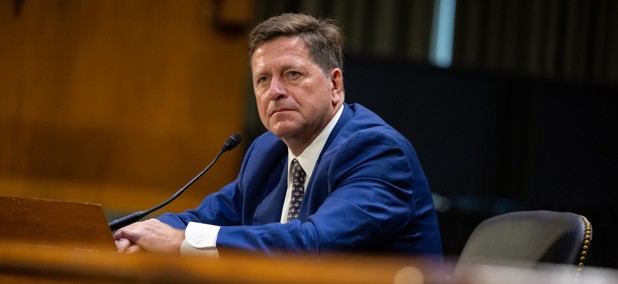
Jay Clayton faced Democratic criticism after repeatedly declining to say Joe Biden won in 2020 and standing by subpoenas issued by his Manhattan prosecutor’s office to four New York Times journalists.
The confirmation hearing of Jay Clayton, President Trump's pick for intelligence director, has sparked controversy due to his responses to questions about the 2020 election and his handling of subpoenas issued to New York Times journalists. Clayton's refusal to acknowledge Joe Biden's victory in the 2020 election has raised concerns among Democrats, who view this as a crucial test of his ability to provide unbiased intelligence. This matter is of particular interest to local councils, as it highlights the importance of non-partisan information and the potential implications for civic trust in government institutions.
The issue of subpoenas issued to New York Times journalists is also significant, as it touches on the delicate balance between national security and press freedom. Clayton's defense of the subpoenas, which were issued by his office during his tenure as a Manhattan prosecutor, has been met with skepticism by some lawmakers. This development is being closely watched by media organizations and civil liberties groups, who are concerned about the potential chilling effect on investigative journalism. For local councils, this raises questions about the limits of government power and the need for transparency in dealings with the press.
As the confirmation process for Jay Clayton continues, council members will be watching to see how his nomination is received by the full Senate. They will also be monitoring the response from media organizations and civil liberties groups, who may push for greater clarity on Clayton's views on press freedom and election integrity. Additionally, council members may consider the potential implications of Clayton's appointment for the flow of information to local governments and the potential impact on civic engagement and trust in institutions. The outcome of this nomination process will be closely watched, as it has significant implications for the balance of power and the role of intelligence agencies in shaping public policy.
Originally reported by govexec.com. CouncilNews adds analysis for government & civic readers.